- PhD project 1 (1+3 MSc and PhD, funded, Start date: October 2024) is available.
Insight of Local Atomic Structure of Metal-Organic Frameworks Via 4D STEM Imaging
Metal organic frameworks (MOFs) have been named as one of “the top ten emerging technologies in chemistry” by the International Union of Pure and Applied Chemistry. MOFs are highly promising materials for various applications in clean energy due to their adjustable compositions, tunable topologies, and large surface areas. However, our understanding of the molecular-level interactions between the framework and guest molecules, which play a crucial role in these applications, is limited. Conventional scanning transmission electron microscopy (STEM) faces great challenges in achieving atomic-resolution imaging of MOFs due to delicate bonding and susceptibility to damage. Recent advancement of low-dose 4D-STEM presents an unprecedented opportunity to explore atomic-scale structures of porous materials.
The objective of this project is to employ low-dose 4D STEM, a cutting-edge microscopy technique, to investigate the atomic-level structures of porous crystalline materials, including MOFs. This approach will enable the observation of previously unattainable details such as atomic defects, host-guest interactions, and surface structures. By exploring host-guest interactions and studying adsorption kinetics at the atomic level, this research will contribute to the development of MOFs for applications such as gas storage, catalysis, bioimaging, and clean energy.
The project will be underpinned by the world-leading facilities at the Warwick Analytical Science Centre, which offers a wide range of state-of-the-art analytical techniques. The centre’s JEOL ARM microscope, equipped with an ultrafast detector capable of recording images at 1000 frames per second, will be used for various advanced 4D STEM image techniques such as virtual STEM, DPC and ptychography. This opens up possibilities for applying these methods in the characterization of diverse materials.
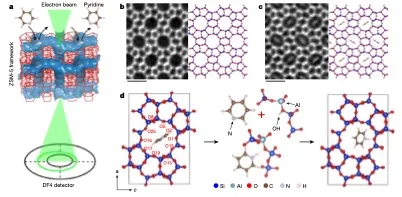
Fig. 1 | Strategy for 4D-STEM imaging of small molecules by host–guest interactions [3].
References:
- Zhou, L., … & Wang* P.Low-dose phase retrieval of biological specimens using cryo-electron ptychographyLink opens in a new window. Nature Communications, 11, 2773 (2020).
- Ding, Z.,…. & Wang*, P.Three-dimensional electron ptychography of organic-inorganic hybrid nanostructuresLink opens in a new window. Nature Communications 13, 4787, (2022).
- Shen, et al., Nature, 2022. 607: 703-707
The application deadline for all courses starting in September/October is (GMT) on 7 August 2023; however places are limited so you should submit your application as soon as possible.
 Peng Wang's Group(王 鹏)